Crew Rehab in the Field: What a Small Trailer Should Provide
What field rehab needs for SAR and fire crews: NFPA basics, shade, cooling, warming, hydration, food, rest, medical monitoring and what small trailers can do.
· Koru Overland
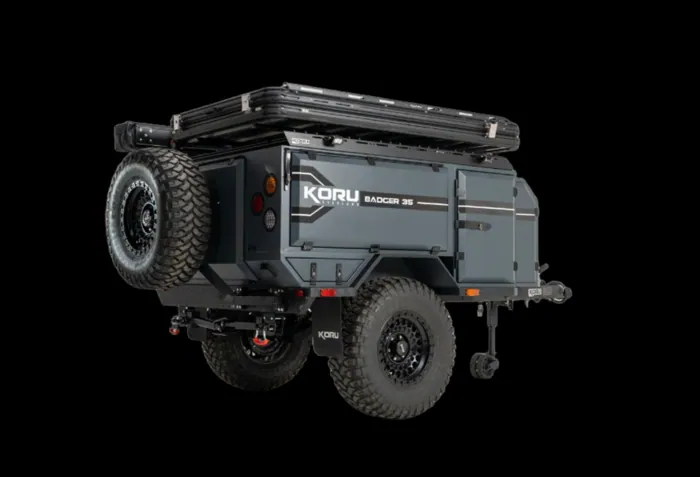
Crew rehab is a structured break that gives responders rest, fluids, food, relief from heat or cold, and a medical evaluation before they go back to work. A small rehab trailer should supply the physical pieces close to the work: shade or shelter, heat, cold drinks and food, power for lights and fans, and water storage. Qualified personnel provide the medical monitoring. The trailer is a platform, not a medical unit.
This article covers what rehab is for, where the NFPA standards stand today, and what a compact off-road trailer can and cannot add. It is written for SAR teams, volunteer fire departments and emergency management offices. We offer the Koru Muster R35 for this role, but the guidance is general.
What is the purpose of crew rehab?
The U.S. Fire Administration’s manual Emergency Incident Rehabilitation, developed with the IAFF, frames the goal simply: send people back into action, or back to the station, in roughly the same condition they arrived. The same manual notes that members without adequate rest and rehydration are at higher risk of illness or injury and can put others at risk.
Search teams face the same physiology as fire crews, often over longer periods. A long grid search in August heat, or a night search in a cold front, wears people down even without turnout gear.
What do NFPA standards say about rehab?
For years, the reference was NFPA 1584, Standard on the Rehabilitation Process for Members During Emergency Operations and Training Exercises. In its 2025 edition, NFPA 1580 consolidated NFPA 1581, 1582, 1583 and 1584 into a single standard: NFPA 1580, Standard for Emergency Responder Occupational Health and Wellness. Rehab requirements now live in NFPA 1580. If your SOPs cite NFPA 1584, it is worth reviewing them against the current NFPA 1580.
The five rehab needs
The USFA manual, written around the earlier NFPA 1584, lists five needs a rehab operation should meet at a minimum:
- Medical evaluation and treatment
- Food and fluid replenishment
- Relief from climatic conditions
- Rest and recovery
- Member accountability
Those five needs are still a useful planning frame, whichever edition your agency follows.
Work and rest guidelines
The same manual describes NFPA 1584-era guidelines for fire crews, such as at least 10 minutes of self-rehab after one 30-minute SCBA cylinder or 20 minutes of intense work, and formal rehab with medical evaluation and at least 20 minutes of rest after two 30-minute cylinders or 40 minutes of intense work without SCBA. Treat these as background. Check NFPA 1580 and your agency’s medical direction for current triggers, and adapt them for search work, which rarely involves SCBA.
How should a rehab area provide shade and cooling?
In Texas, heat is usually the bigger threat. The USFA manual recommends a shaded, cool site in hot weather and a warm, dry, wind-protected site in cold weather, out of precipitation and free of vehicle exhaust.
Practical cooling options:
- Real shade. An awning with walls, a canopy or a building shadow. Walls on the sun side make a large difference late in the day.
- Air movement. Fans powered from a battery help sweat evaporate.
- Remove gear. Responders should open or remove protective layers in rehab.
- Cold drinks. Refrigeration keeps water and electrolyte drinks cold.
- Misting, with caution. The USFA manual notes misting works in hot, dry climates but loses effectiveness as humidity rises. Along the Gulf Coast and in East Texas, plan on shade, airflow and rest instead.
Active cooling methods for people showing heat illness are a medical decision for EMS under your protocols.
How should a rehab area handle cold and warming?
Hill Country nights, West Texas winters and wet searches all bring cold stress. NIOSH advises employers to provide warm break areas and warm liquids for cold-weather work, and to use relief workers for long, demanding jobs.
- A wind-protected, enclosed space with heat
- Dry clothing and blankets
- Hot water for warm drinks and simple food
- A dry place to sit off cold ground
Any heater used near people must be vented outside, with a CO alarm in the space. Our guide to diesel air heaters covers exhaust routing and CO safety.
What hydration and food should rehab provide?
OSHA and NIOSH advise that during moderate activity in moderately hot conditions, workers drink about 1 cup every 15 to 20 minutes, and generally not more than 12 quarts (48 cups) in 24 hours. The same guidance notes that regular meals and snacks usually replace salt lost in sweat when people drink enough water.
A rehab setup should provide:
| Need | What to stock |
|---|---|
| Fluids | Cold water and electrolyte drinks in hot weather; warm drinks in cold |
| Calories | Easy-to-eat food: fruit, bars, sandwiches, soup |
| Food safety | Refrigeration for perishables; hand-washing supplies |
| Containers | Single-use cups or labeled bottles to limit cross-contamination |
Bring bottled drinking water. Water from onboard tanks should be treated or disinfected per local health guidance before drinking.
Why does rest matter so much?
Rest lets heart rate and core temperature recover. It also improves decisions in the next assignment. A good rest area is quiet, shaded or warm, out of traffic, and has places to sit and, on long operations, somewhere to lie down. On multi-day searches, a place for one or two people to sleep off the ground lets a team rotate real sleep through the operational period.
Who handles medical monitoring?
Medical evaluation is the core of formal rehab, and it belongs to qualified personnel. The USFA manual describes an initial assessment of everyone entering rehab, including vital signs, with anyone showing signs of illness or injury sent to medical evaluation and treatment before anything else.
In practice:
- EMS personnel working under your agency’s protocols and medical direction take and record vital signs.
- They decide who returns to work, who needs more rest, and who needs treatment or transport.
- Rehab staff track who is in rehab, when they arrived and when they were released.
Equipment supports this work by providing a sheltered, lit place to do it. It does not perform it.
What can a small off-road trailer provide for rehab, and what can’t it?
| A small rehab trailer can provide | It cannot provide |
|---|---|
| Shade and wind protection from an awning with walls | EMS staffing or medical direction |
| Heat in cold weather | Medical treatment or monitoring equipment by itself |
| Refrigeration for drinks and food | Medical-grade cold storage for medications |
| Battery power for lights, fans and chargers | Air conditioning for a large group |
| Water storage for washing and cooking | Certified drinking water |
| A place to sit, rest and briefly sleep | Rehab capacity for a large multi-agency incident |
| Access to rough sites where large units cannot go | A substitute for a dedicated rehab vehicle |
The main advantage of a compact trailer is position. Rehab works best when it is reasonably close to the work, and a small trailer can reach a ranch road or trailhead where a large rehab vehicle cannot. For the wider base-camp picture, see our SAR base camp trailer guide.
The Koru Muster R35 as a Rehab Support Platform
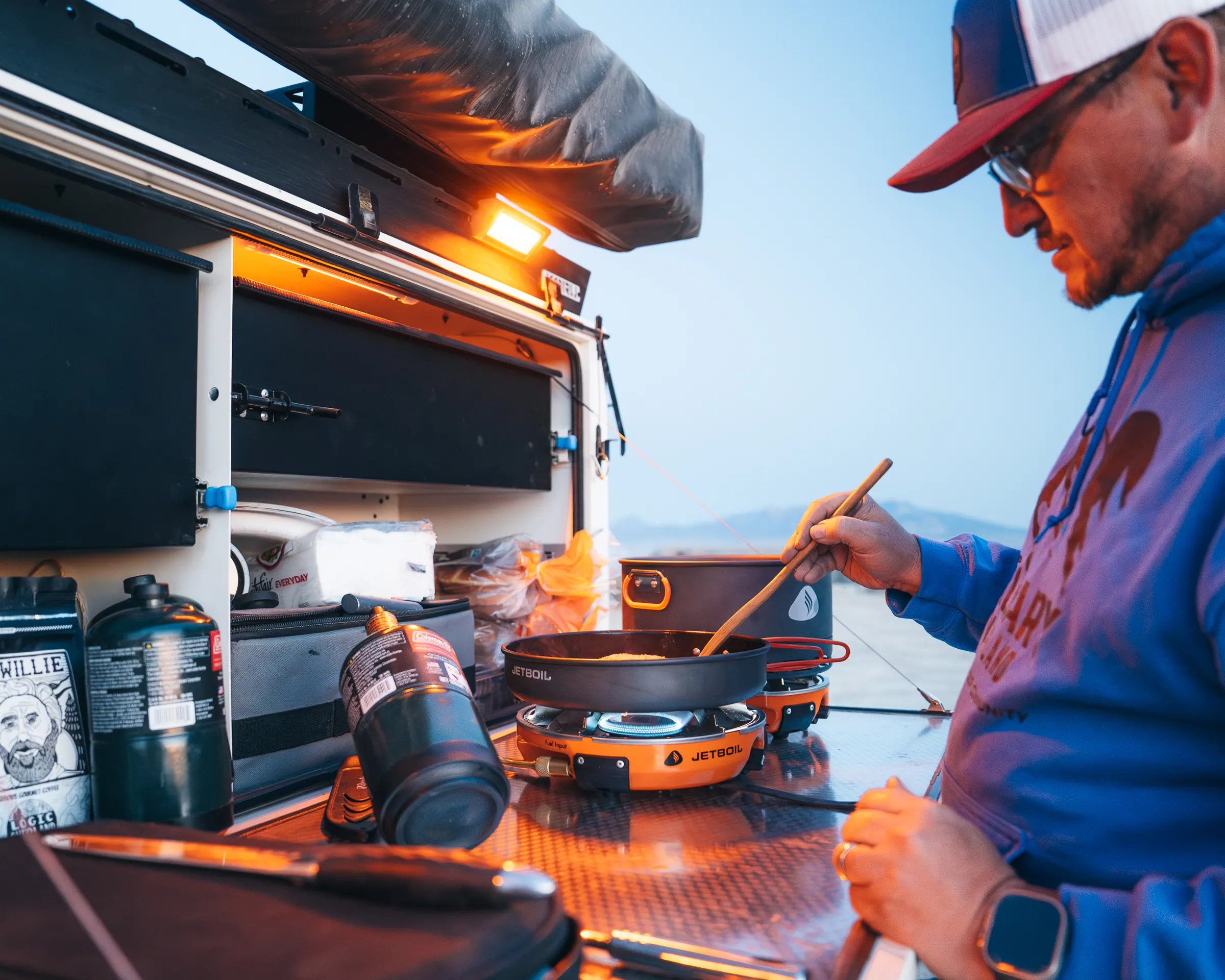
The Muster R35 supports crew rehab with a 270-degree awning with walls for shade and wind, a diesel air heater, Dometic 55 L and 25 L fridge/freezers, a stove and sink, a REDARC 150Ah lithium system with a 3,000 W inverter, an 80 L water tank, and a rooftop tent for rotating rest. It is not a medical unit, and its water filtration is for taste, odor and clarity, so plan to treat drinking water per local guidance. See the Muster R35 page or request a quote.
Common questions
What is crew rehab at an incident?
Rehab is a structured break where responders get rest, fluids, food, relief from heat or cold, and a medical evaluation before returning to work. The goal is to return them in about the same condition they arrived.
Is NFPA 1584 still the current rehab standard?
NFPA 1584 was consolidated, along with NFPA 1581, 1582 and 1583, into NFPA 1580, Standard for Emergency Responder Occupational Health and Wellness, in its 2025 edition. Check the current edition for today's requirements.
How much water should responders drink during rehab?
OSHA and NIOSH advise about 1 cup every 15 to 20 minutes during moderate work in moderate heat, and warn against drinking more than 12 quarts in 24 hours. Agency medical direction may set different targets.
Who performs medical monitoring in rehab?
Qualified personnel, typically EMS providers working under the agency's protocols and medical direction, take vital signs and decide who needs treatment or transport.
Can a small trailer serve as a rehab unit?
It can support rehab with shade, shelter, heat, cold storage for drinks and food, battery power and water storage. It does not replace EMS staffing, medical equipment or a purpose-built rehab vehicle for large incidents.
Written by the Koru Overland team, a service-disabled veteran-owned company in Addison, Texas. Questions? Call (214) 912-6102 or contact us.