Funding a Disaster Response Trailer: A Guide for Texas Teams
How Texas counties, cities, fire departments and nonprofit SAR teams can fund a response trailer: budgets, bid thresholds, co-ops, grants and paperwork.
· Koru Overland
Deciding that your team needs a response trailer is the easy part. Paying for it, and buying it in a way your auditor will sign off on, takes more planning. This guide walks through the common funding and purchasing paths for Texas counties, cities, fire departments, emergency management offices and nonprofit search and rescue teams.
It is general information, not legal or grant advice. Procurement rules depend on the type of entity you are, and grant programs change. Always confirm details with your purchasing office, county auditor, legal counsel or state administrative agency before you commit. We sell a response trailer at Koru Overland, but the steps below apply no matter what you buy.
Path 1: The Operating Budget
The simplest route is often the overlooked one. If the purchase fits in your equipment or capital line, an operating budget purchase avoids grant timelines, reporting and reimbursement delays.
A few things make a budget request easier to approve:
- Tie it to a real gap. Describe the searches or deployments where your team lacked a forward base, power or shelter.
- Show the lifetime cost. Include add-ons, registration, insurance and maintenance, not just the sticker price.
- Show shared use. A trailer that also supports training, community events or other departments is easier to justify.
- Time it with the budget cycle. Many Texas local governments build budgets over the summer for a fiscal year that starts October 1. Check your own calendar.
Path 2: Know Your Bid Threshold
For Texas counties, Local Government Code Section 262.023 generally requires competitive bids or proposals for purchases over $50,000. Below that amount, counties typically follow their own purchasing policies, which often call for documented quotes.
Things to keep in mind:
- The total matters. Add-ons, accessories and installation can push a purchase over the threshold even when the base price is under it. Price the full configuration you actually need.
- Do not split purchases. Breaking one purchase into smaller pieces to avoid bidding can violate the statute. Your purchasing agent can tell you how related items should be grouped.
- Other entities have other rules. Cities, special districts, emergency services districts and school districts have their own statutes and local policies. The $50,000 county figure is a useful reference, not a universal rule.
Statutes are amended from time to time, so confirm the current threshold with your purchasing office.
Path 3: Cooperative Purchasing
Texas law allows local governments to buy through cooperative purchasing programs that have already run a competitive procurement. When the item is on a qualifying cooperative contract, that purchase can satisfy local competitive bidding requirements, often with far less paperwork than running your own bid.
Three cooperatives that Texas agencies commonly use:
- BuyBoard, associated with the Texas Association of School Boards and widely used by local governments as well as schools
- TIPS-USA (The Interlocal Purchasing System), administered through Region 8 Education Service Center
- HGACBuy, run by the Houston-Galveston Area Council, with contracts that include emergency vehicles and equipment
Membership, contract categories and vendor lists change. Ask your purchasing office which cooperatives your entity belongs to, and ask any vendor whether the specific item you want is on a current cooperative contract. If it is not, you will generally need to use your normal quote or bid process.
Path 4: Federal Preparedness Grants
Many agencies fund equipment through federal preparedness grants. Eligibility, allowable costs and match requirements differ by program, and none of them guarantee funding for any particular item.
Homeland Security Grant Program (HSGP) and SHSP
The Homeland Security Grant Program includes the State Homeland Security Program (SHSP). These funds flow from FEMA to the state, which then passes funding to local jurisdictions. In Texas, the Office of the Governor and the Texas Division of Emergency Management play central roles, and regional councils of governments often coordinate local project submissions. Projects generally need to tie to state and regional preparedness priorities.
Emergency Management Performance Grant (EMPG)
EMPG supports state and local emergency management programs. Local emergency management offices typically receive funding through the state. Whether a given equipment purchase is allowable depends on the program guidance and your state’s rules.
Assistance to Firefighters Grant (AFG)
AFG is different: fire departments, nonaffiliated EMS organizations and state fire training academies apply directly to FEMA rather than through the state. The program has funded equipment, protective gear and vehicles, and generally requires a cost share. Competition is significant, so a strong narrative about your community’s needs matters.
A caution about 2025 and 2026
FEMA grant programs have been in flux during 2025 and 2026. Funding notices have been delayed, performance periods and conditions have changed, and some changes have been challenged in court. Before you build a plan around a grant, confirm the current status, deadlines and allowable costs with your state administrative agency, your regional council of governments, or the FEMA program office.
Path 5: Nonprofit SAR Teams
Volunteer search and rescue teams organized as nonprofits usually cannot apply for the government grants above on their own, although some partner with a sponsoring county or fire department. More common funding sources include:
- Community and family foundations. Many local foundations fund public safety and emergency preparedness. Read their guidelines and deadlines carefully.
- Corporate giving programs. Local employers, utilities and energy companies sometimes support preparedness projects in the communities where they operate.
- Civic and service clubs. Rotary, Lions and similar groups often fund tangible equipment.
- Direct donations and fundraising. A clear project page with a photo, a target amount and a description of how the trailer will be used tends to perform better than a general appeal.
- In-kind support. A donor might cover add-ons, insurance or registration even if they cannot fund the whole trailer.
Funders want to see that you will maintain the asset and use it. Include a short plan for storage, maintenance, training and who is authorized to tow it.
Documentation Checklist
Whatever the funding path, have these ready before you ask:
- Written quote with line items for the trailer and each add-on, and a quote expiration date
- Spec sheet describing dimensions, weights, power and capabilities
- Compliance matrix mapping your written requirements to the product’s features, line by line
- Vendor W-9 for your accounts payable or finance office
- Needs statement explaining the gap the trailer fills
- Tow plan listing which vehicles can tow it within their ratings
- Budget detail including registration, insurance and maintenance
- Cooperative contract number, if you are buying through a co-op
- Grant guidance references, if you are using grant funds, showing the cost is allowable
A compliance matrix in particular saves time. It shows reviewers you defined requirements first and chose the equipment second. Our SAR base camp trailer guide includes a requirements checklist you can adapt.
Requesting a Quote for the Koru Muster R35
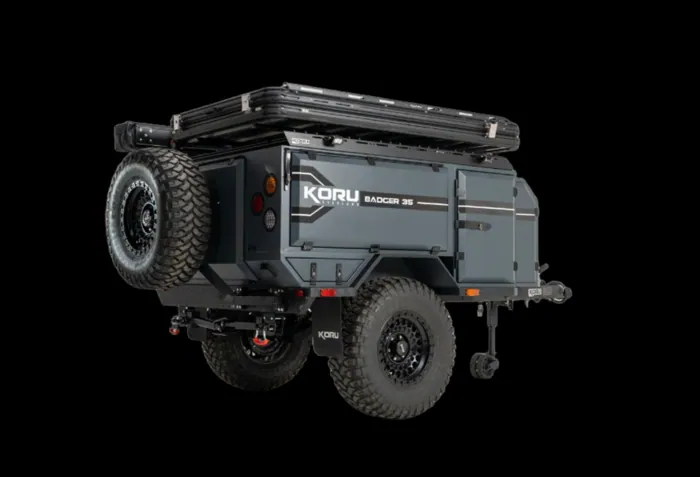
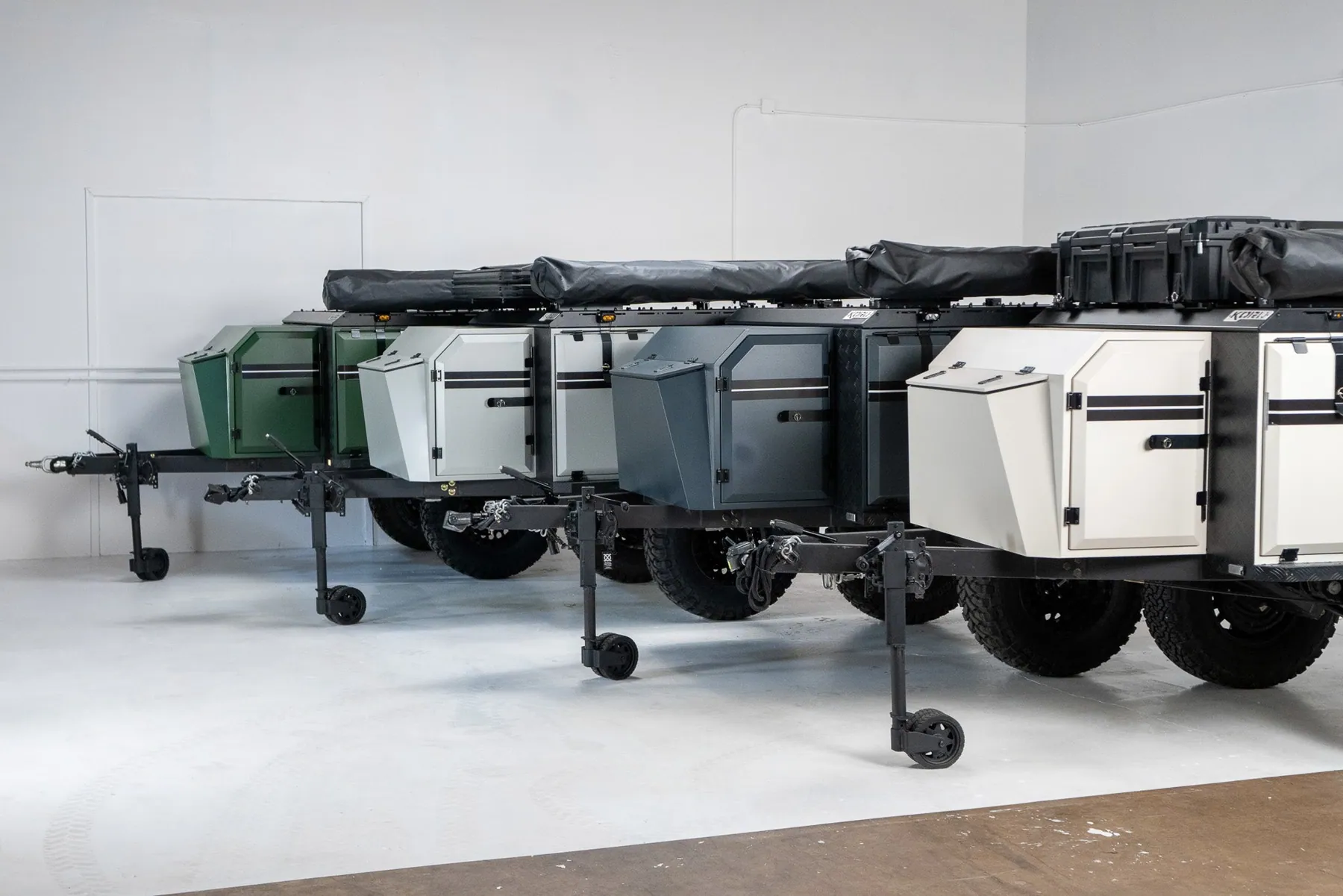
The Koru Muster R35 is a compact off-road forward-base trailer for SAR teams, emergency management and fire/EMS. The base price is $40,375, under the $50,000 Texas county competitive bid threshold, and units are available from current stock. Add-ons such as the Starlink comms package, LoRa mesh nodes, solar and an extended battery are quoted separately, so price the full configuration before you choose a purchasing path.
Download the Muster R35 spec sheet for your packet, review the details on the Muster R35 page, or request a written quote. For other questions, you can contact us.