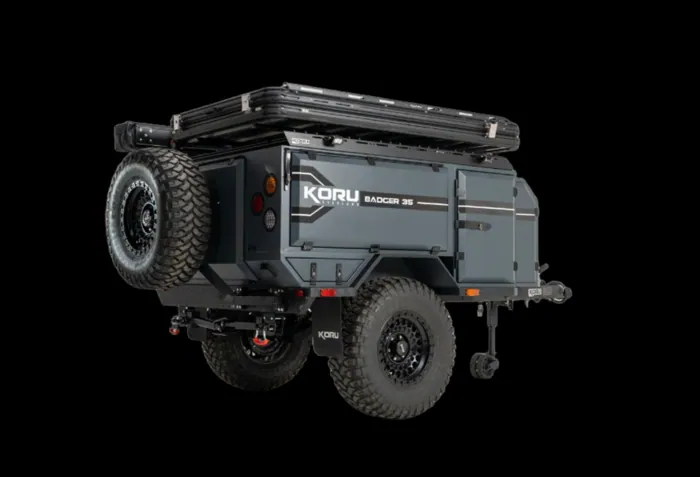
Hurricane Season Response Trailer Checklist for Texas Teams
A hurricane season checklist for Texas response trailers: maintenance, staging, power and charging, comms backup, water, fuel, PPE and documentation.
· Koru Overland
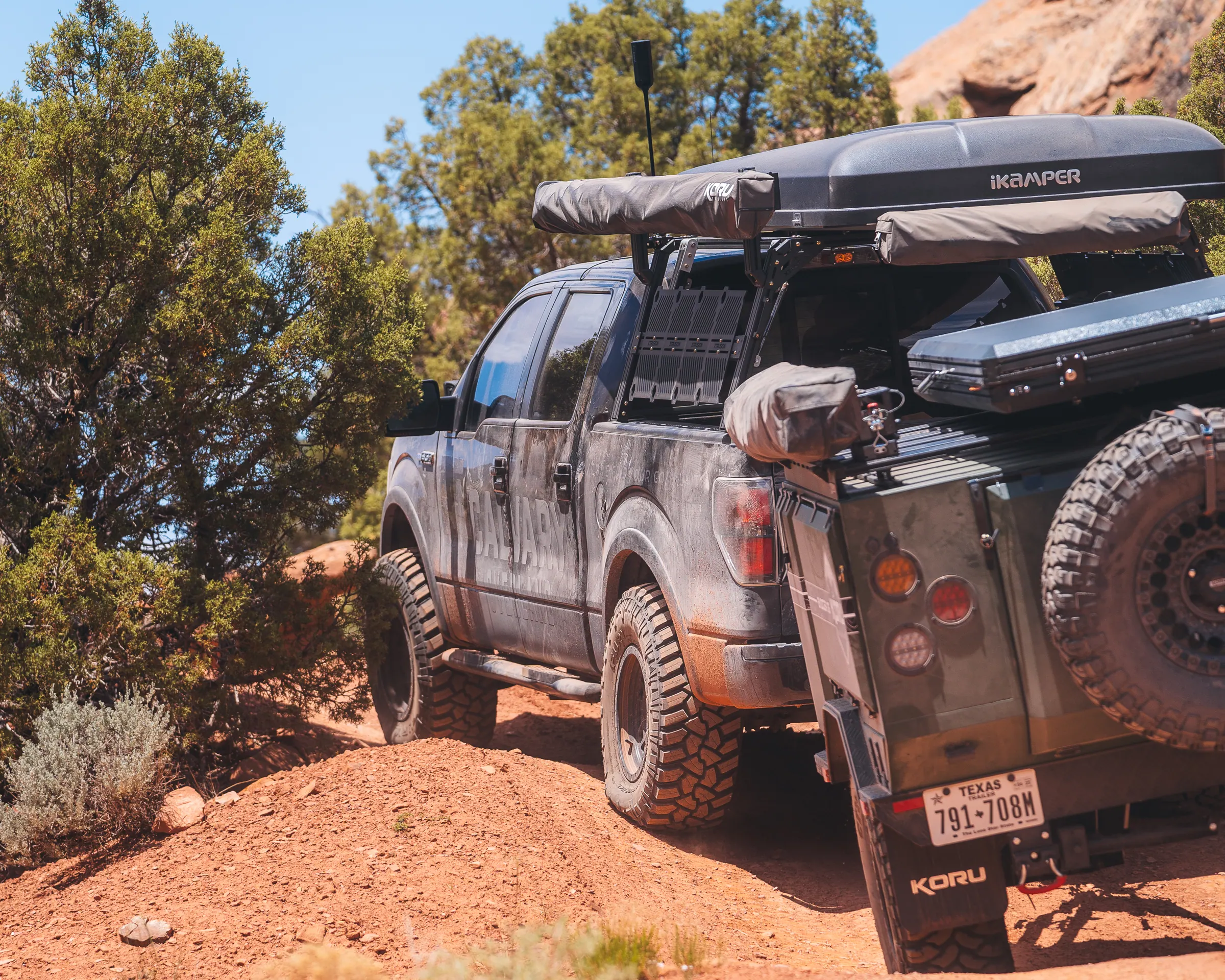
A hurricane-ready response trailer is one that is serviced, stocked, charged and documented before June 1, staged where it will not flood, and backed by a written power, comms, water and fuel plan. The Atlantic season runs June 1 to November 30, and the National Hurricane Center notes that most activity falls between mid-August and mid-October. Teams that do the work in spring have time to fix what they find.
This checklist is for Texas SAR teams, fire departments, emergency management offices and volunteer response groups. It applies to any small response trailer. We build the Koru Muster R35 for this kind of work, but the steps below are general. Always follow your agency’s plans and the direction of local officials and the Texas Division of Emergency Management.
When should Texas teams start hurricane preparation?
Plan on three windows:
| Window | Timing | Focus |
|---|---|---|
| Pre-season | April to May | Full maintenance, inventory, training, paperwork |
| Mid-season check | Early August | Repeat battery, fuel and supply checks before the busiest stretch |
| Pre-deployment | When a storm is forecast | Top off, load, confirm staging and crew assignments |
TDEM points Texans to the Texas Hurricane Center and Ready.gov’s hurricane guidance for public preparedness information. Your agency’s own plan and mutual aid agreements come first.
What pre-season maintenance does a response trailer need?
Do this in spring, write it down, and fix problems while parts are easy to get.
Running gear
- Tire pressure, tread and DOT date codes on all tires, including the spare
- Wheel bearings checked for play and serviced on schedule
- Brakes and breakaway system tested
- All lights working; plug and wiring clean
- Hitch, coupler and safety chains inspected
- Recovery points and straps on hand
Power
- Battery charged and state of charge confirmed on the monitor
- Shore, vehicle and solar charging inputs each tested
- Inverter run under a real load
- Spare fuses and cables
Living systems
- Water tank drained, sanitized and refilled; filters replaced if due
- Propane connections leak-tested with soapy water
- Heater, stove and fridge run for a full cycle
- Awning, walls and tent set up and inspected for damage
Our overland trailer inspection checklist has more detail on each item.
Where should you stage a response trailer before landfall?
Staging decides whether the trailer is useful after the storm or becomes part of the damage.
- Stay out of flood-prone ground. Know your local flood risk and avoid low spots, creek bottoms and lots that pond in heavy rain.
- Stage inland or behind the storm, then move in. Many teams pre-position outside the expected impact area and advance once conditions allow.
- Plan routes around water. Ready.gov warns that six inches of fast-moving water can knock you down and one foot can sweep a vehicle away. A loaded trailer makes that worse. Turn around.
- Avoid trees and power lines when parking for high winds.
- Keep it hitched or ready to hitch. Know who has the tow vehicle and the keys.
How should you plan power and charging?
A response trailer’s battery runs comms, lighting, laptops, radio chargers and refrigeration. Commercial power may be out for days, so plan as if there will be no shore power.
- List the loads. Write down each device and its wattage. Measure if you can.
- Estimate hours. Multiply watts by hours of use per day to get watt-hours.
- Compare to usable battery capacity. Lithium systems commonly allow most of their rated capacity to be used. Check your battery’s specifications.
- Plan recharging. Vehicle charging while driving, portable solar panels during the day, and shore power at a shelter or station when available.
- Assign a power lead. One person watches state of charge and decides what to shed first.
If you use a generator, run it outdoors and far from openings, and keep it well away from where people sleep. Our guide to off-grid comms and power for SAR includes worked runtime examples.
What is a good comms backup plan for hurricane response?
Cell networks can be overloaded or down after a major storm. Build layers:
- Radios first. Land mobile radio remains the backbone. Confirm frequencies, talkgroups and interoperability plans before the season, and keep chargers and spare batteries on the trailer.
- Satellite backhaul. A Starlink terminal can give the base internet access for mapping, email and coordination when local networks fail. Confirm your service plan in advance and test setup from the trailer.
- LoRa mesh. Low-power mesh nodes can carry short text messages and positions between the base and field teams without cell service. They are low bandwidth and do not replace radios.
- Paper backup. Printed contact lists, maps and frequency plans still work when every battery is dead.
How should teams handle water in a hurricane response?
Water systems on small trailers are for cooking, cleaning and hand washing. For drinking, plan conservatively:
- Bring bottled water as the primary drinking supply.
- Treat or disinfect other water following CDC emergency water guidance and local health direction. CDC guidance includes bringing clear water to a rolling boil for 1 minute (3 minutes above 6,500 feet), or adding 8 drops of 5 to 9 percent unscented bleach per gallon and waiting at least 30 minutes.
- Keep floodwater out of the system. OSHA notes that floodwaters may contain biohazards from raw sewage, dead animals and rotting food. Never fill tanks from it.
- Watch boil-water notices in the area you deploy to, and do not fill tanks from a system under a notice.
Onboard filtration for taste, odor and clarity is useful, but it is not a substitute for treatment or disinfection.
How much fuel should you plan for?
Fuel can be hard to find after a major storm if stations lose power or supply. Plan for it:
- Tow vehicles and generators filled before the storm
- Approved fuel cans stored and secured outside the living space
- Propane cylinders full and leak-tested
- Heater fuel tank topped off if your trailer has one
- Fuel log started at deployment
Know where agency fuel is available and how your county or state will coordinate fuel for responders.
What PPE and crew-rest supplies should be staged?
PPE
OSHA’s hurricane response recommendations cover protective footwear with water protection in wet areas, safety glasses, hard hats where overhead or electrical hazards exist, task-appropriate gloves, protective clothing and high-visibility apparel near traffic. Chainsaw work needs its own PPE and training. Stage PPE by crew size, with spare sizes.
Crew rest
OSHA also recommends adequate sleep, meal and rest breaks to reduce fatigue-related accidents, and doing higher-hazard work in daylight with well-rested workers. Heat is often the bigger threat after a Gulf storm, when power is out and humidity is high. Stage:
- Shade and a place to sit out of the sun
- Water and electrolyte drinks, and food that needs little preparation
- A cooled or ventilated rest space and a dark place for short sleep
- Hand-washing and sanitation supplies
- First aid kit, checked and restocked
For more on structured rest, see crew rehab in the field.
What documentation do agencies keep?
Good records support safety, after-action reviews and any reimbursement process.
- ICS 214 activity logs. FEMA describes the ICS 214 Activity Log as a record of notable activities at any ICS level, useful for after-action reports and for documenting reimbursement claims.
- Equipment use records. For agency-owned equipment, FEMA’s force account equipment summary record asks for the equipment type and size, operator, dates and hours used. Log trailer hours, locations and operators from day one.
- Maintenance and inspection logs from the pre-season check and each deployment.
- Fuel and supply logs.
- Photos of the trailer and its condition before and after deployment.
Reimbursement rules and eligibility change and depend on the declaration and program. Ask your emergency management coordinator what your jurisdiction needs.
The Koru Muster R35 for Hurricane Season
The Muster R35 gives a small crew a self-sufficient forward base: a REDARC 150Ah lithium system upgradable to 420Ah, a 3,000 W inverter, shore, vehicle and solar charging, refrigeration, a diesel air heater, a 270-degree awning with walls and an 80 L water tank. Starlink, LoRa mesh and solar packages are quoted separately. Units are available from current stock. Read the spec sheet, see the Muster R35 page, or request a quote.
Common questions
When is hurricane season in Texas?
The Atlantic hurricane season, which covers the Texas coast, runs June 1 to November 30. NOAA's National Hurricane Center notes most activity falls between mid-August and mid-October.
What maintenance should a response trailer get before hurricane season?
Check tires and their date codes, bearings, brakes, lights, hitch and safety chains, then test the battery, charger, inverter, water system and any fuel-burning appliances. Record everything in a maintenance log.
How should a team handle drinking water during a hurricane response?
Bring bottled water as the primary supply and treat or disinfect any other water following CDC and local health guidance. CDC guidance includes a 1-minute rolling boil or 8 drops of 5 to 9 percent unscented bleach per gallon with a 30-minute wait.
What records should we keep for a deployed trailer?
Keep ICS 214 activity logs and, for agency-owned equipment, records of the equipment type, operator, dates, locations and hours used. These support after-action reports and any reimbursement claim.
Is Starlink enough for hurricane communications?
No single tool is enough. Radios remain the backbone, satellite internet provides backhaul when local networks fail, and a LoRa mesh can carry short texts and positions. Follow your agency's communications plan.
Written by the Koru Overland team, a service-disabled veteran-owned company in Addison, Texas. Questions? Call (214) 912-6102 or contact us.