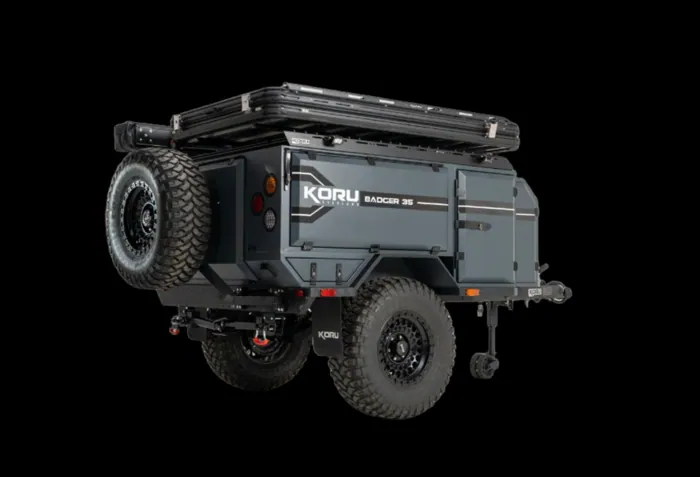
SAR Base Camp Trailer: What a Search Team Really Needs
A practical guide to choosing a search and rescue base camp trailer: staging, crew rest, charging, comms, shelter, water, towing and a requirements checklist.
· Koru Overland
Most search and rescue teams do not need a 40-foot command post. They need a dependable place to work out of for a long operational period, parked as close to the search area as the terrain allows. That is a different problem, and it leads to a different kind of trailer.
This guide walks through what a small SAR team, emergency management office or volunteer fire department should look for in an off-road base camp trailer. It applies whether you buy from us at Koru Overland or from someone else. The checklist near the end is meant to be copied into your own planning documents.
Start With the Operational Period, Not the Floor Plan
A search rarely ends in one shift. Teams commonly plan in operational periods, and a missing-person search in rough country can run through several of them. The trailer’s job is to make the second and third periods as effective as the first.
That means thinking in hours rather than features:
- How long will the crew be on scene before resupply?
- How many people will rotate through the base at once?
- What has to stay powered the whole time (comms, laptops, lighting, radio chargers)?
- Where will people rest, eat and warm up or cool down?
If you can answer those four questions, most equipment decisions answer themselves.
Staging Past the Trailhead
Large command vehicles usually stop at the paved lot. The search area often starts miles further in, down a ranch road, a pipeline right-of-way or a washed-out two-track. Every mile between the base and the search segments costs time on every shift change, every resupply run and every patient handoff.
A small off-road trailer lets you stage closer. Look for:
Ground clearance and suspension
Independent suspension and large all-terrain tires matter more than interior volume. A trailer that hangs up on a rut or a cattle guard approach is not a forward base.
Departure angle and a compact footprint
A short, narrow trailer turns around in places a long one cannot. On a narrow road with no turnaround, that can decide whether you can stage there at all.
Recovery points
Solid recovery points front and rear are basic. If the tow vehicle gets stuck, you want to be able to unhitch and recover each separately.
Crew Rest and Rehab
Fatigue is a safety problem. A base that offers shade, a place to sit, hot food and somewhere to lie down for a short rest helps crews go back out in better shape.
Useful features include:
- An awning with walls that turns the side of the trailer into a sheltered work and rest area.
- A rooftop tent or bunk so one or two people can sleep off the ground during a long period.
- A kitchen with a stove and refrigeration for hot meals and cold drinks without a separate generator.
- Heat for cold nights. A diesel or propane air heater makes a big difference for crews coming off a night shift.
Charging and Power
Modern SAR runs on batteries: handheld radios, GPS units, phones, tablets, headlamps, thermal imagers and laptops running mapping software. A base trailer should be able to recharge all of that without running a generator all night.
What to look for:
- A lithium battery bank sized for your expected load, with a clear path to upgrade.
- An inverter for laptop bricks and chargers that need AC power.
- Multiple charging inputs: shore power when it is available, the tow vehicle’s alternator while driving, and solar while parked.
- A battery monitor that shows state of charge at a glance, so nobody has to guess how many hours are left.
We go deeper on battery sizing in our guide to off-grid comms for SAR, and the overland side is covered in off-grid power for overland trailers.
Communications
The trailer is often the only fixed point in the operation, which makes it the natural home for communications gear. Two layers tend to matter:
- Backhaul to the outside world, often satellite internet such as Starlink, so the base can reach the incident commander, dispatch and mapping services.
- Local comms between the base and field teams. Radios remain the standard. Some teams also add a low-power LoRa mesh network for text messages and position sharing where radio traffic is heavy or coverage is patchy.
Plan mounting, cable routing and DC power for this equipment from the start rather than running extension cords out of a window.
Heat, Shelter and Weather
In Texas the threat is often heat rather than cold, although winter storms and Hill Country nights can surprise a crew. A base trailer should offer real shade, a way to keep drinks and food cold, and heat for the nights when temperatures drop. Wind matters too: awning walls and solid tie-downs keep a shelter usable when a front blows through.
Water
A base needs water for cooking, cleaning and hand washing. An onboard tank with a pump and sink is a major convenience. Pay attention to how water is described, though. Filtration that improves taste, odor and clarity is not the same as treatment. Unless a system is certified for the purpose, plan to bring drinking water or treat and disinfect water according to local health guidance.
Towing With Trucks You Already Own
Many small agencies and volunteer teams do not have a heavy-duty truck sitting idle. If the trailer can be towed by a common half-ton pickup or a full-size SUV, more vehicles in your fleet (or your members’ fleets) can move it.
Check three numbers against your tow vehicle’s ratings:
- Gross vehicle weight rating (GVWR) of the trailer
- Tongue weight when loaded
- Your truck’s tow rating and payload, including crew and gear in the cab
Always confirm with the tow vehicle manufacturer’s figures and follow your agency’s towing policy.
What a Small Base Trailer Is Not For
Being honest about limits helps you buy the right tool. A compact off-road base trailer is generally not the right choice for:
- A large incident command post. A big incident with many agencies needs work space for a full command and general staff. That is a different class of vehicle.
- Medical cold storage. Consumer-grade refrigerators are not a substitute for purpose-built, monitored medical storage.
- A power plant for other equipment. The battery bank exists to support the crew and comms, not to run tools, pumps or a whole camp.
A small trailer is a self-sufficient forward base for a small crew. Plan around that strength.
SAR Base Camp Trailer Requirements Checklist
Use this list when you write specifications or compare options:
Mobility
- Off-road suspension and all-terrain tires
- Compact length and width for tight roads and turnarounds
- Towable by your existing vehicles within their ratings
- Front and rear recovery points
Power
- Lithium battery bank sized for your load, with an upgrade path
- Inverter for AC chargers and laptops
- Shore, vehicle DC and solar charging inputs
- Readable battery monitoring
Comms
- Planned mount, cable routing and DC power for satellite internet
- Space and power for radio chargers
- Option for a local mesh network if your team uses one
Crew support
- Awning with walls for shade and wind protection
- Sleeping space for at least one rested crew member
- Stove and refrigeration
- Heater for cold nights
Water
- Onboard tank, pump and sink
- Clear plan for drinking water and treatment
Procurement
- Written quote and spec sheet
- Price relative to your purchasing thresholds
- Funding source identified (see how Texas agencies fund response trailers)
Where the Koru Muster R35 Fits
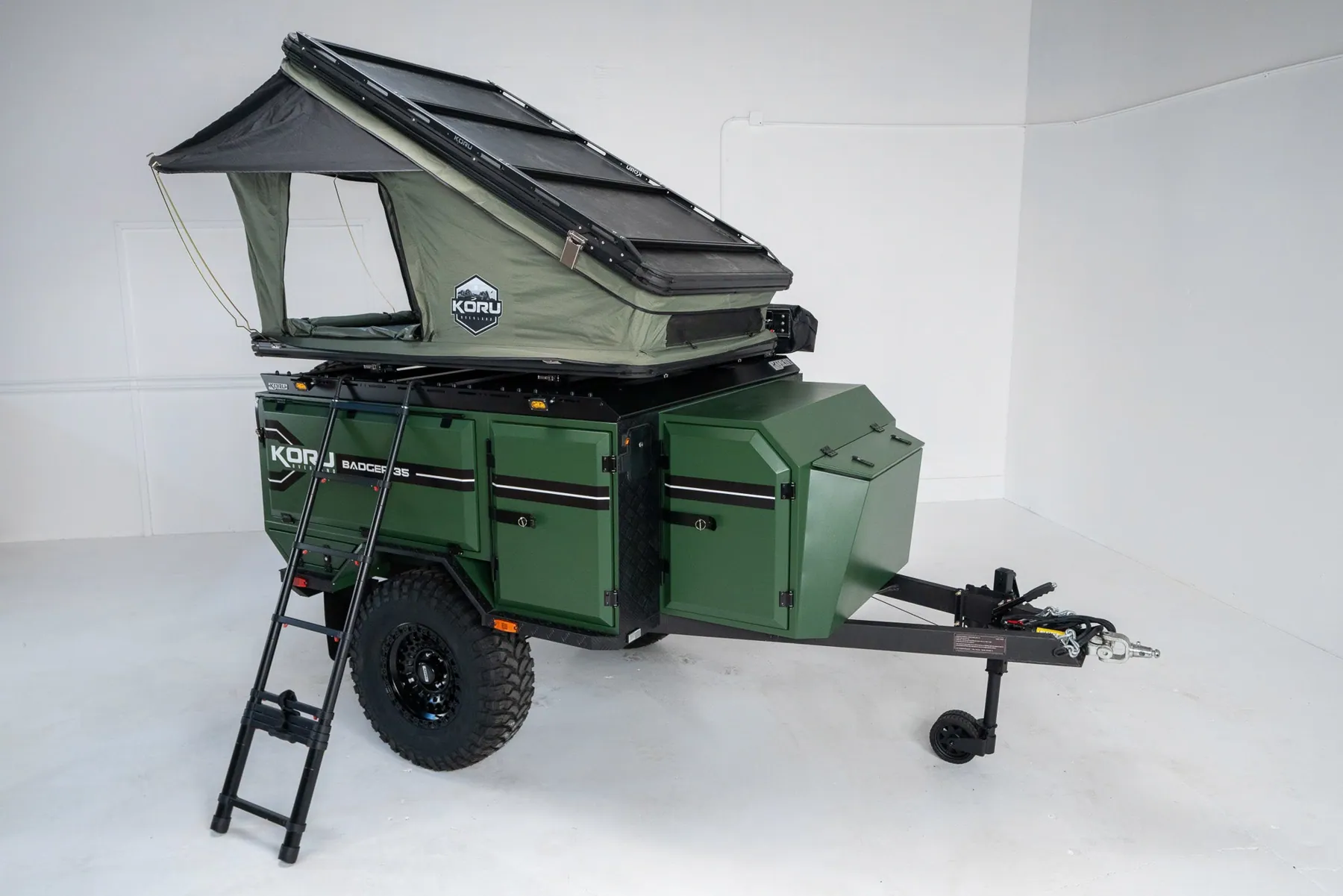
The Koru Muster R35 is our response version of the Badger 35 platform. It is a compact off-road trailer with a REDARC 150Ah lithium system (upgradable to 420Ah), a 3,000 W inverter, shore, vehicle and solar charging, a rooftop tent, a 270-degree awning with walls, Dometic fridge/freezers and stove, a diesel air heater, and an 80 L water tank with sediment, carbon and ceramic filtration for taste, odor and clarity. Its 3,307 lb GVWR keeps it within reach of many half-ton trucks; check your own vehicle’s ratings.
Optional Starlink, LoRa mesh and solar packages are quoted separately. Units are available from current stock, and the base price sits under the $50,000 Texas county bid threshold.
See the full details on the Muster R35 page or request a quote.